Clutch System

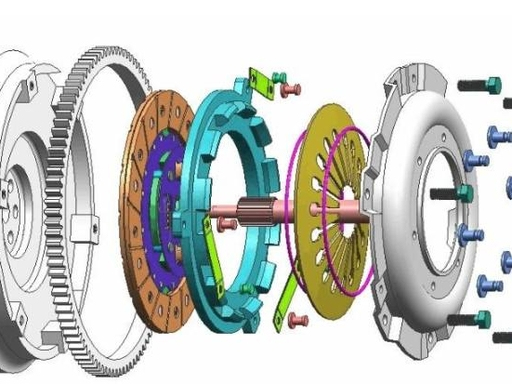
High-quality automotive clutch system featuring wear-resistant special material friction plates, designed for high-temperature resistance and reduced wear. Coupled with an optimized diaphragm spg design, it ensures uniform clamping force, delivering precise disengagement and smooth engagement. This guarantees stable torque transmission, maintaining long-term durability even under harsh operating conditions. By significantly reducing ovele operating costs, it is suitable for a wide range of vehicle types, including heavy-duty trucks and passenger cars.

An engine is a complex machine composed of many mechanisms and systems. Whether it is a gasoline engine or a diesel engine; whether it is a four-strokeine or a two-stroke engine; whether it is a single-cylinder engine or a multi-cylinder engine, it must possess the following mechanisms and systems to complete energy conversion, realize the wrking cycle, and ensure long-term continuous normal operation.

Crank connecting rod mechanism
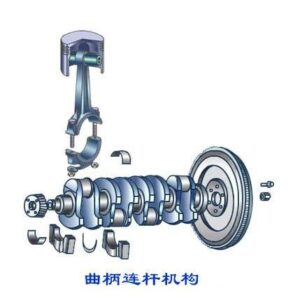
engine


The crank-connecting rod mechanism is the main moving component of an engine that realizes the working cycle and completes energy conversion. It consists of the engine block group, piston-connecting rod group, crankshaft-flywheel group, and other parts. During the power stroke, the piston, under gas pressure, moves linearly in the cylinder, which is converted into the rotary motion of the crankshaft through the connecting rod, and power is output externally from the crankshaft. During the intake, compression, and exhaust strokes, the flywheel releases energy and converts the rotary motion of the crankshaft back into the linear motion of the piston.

Valve train
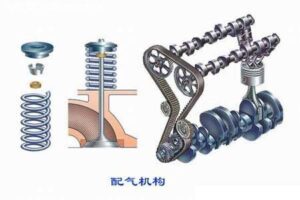
The function of the valve mechanism is to open and close the intake and exhaust valves at the proper time according to the operating sequence and cycle of the engine, allowing the combustible mixture or air to enter the cylinders and the exhaust gases to be expelled from the cylinders, thus completing the gas exchange process. Most valve mechanisms adopt the overhead valve type, which generally consists of the valve group, the valve transmission group, and the valve drive group.

Fuel supply system
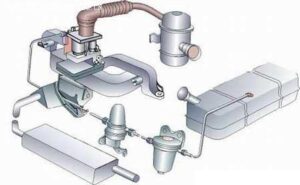
PThe function of the gasoline engine fuel supply system is to prepare a mixture of fuel and air with a specific quantity and concentration according to the engine’s requirements, supply it to the cylinders, and expel the exhaust gas after combustion from the cylinders into the atmosphere. The function of the diesel engine fuel supply system is to supply diesel fuel and air to the cylinders separately, form a combustible mixture in the combustion chamber and burn it, and finally discharge the exhaust gas after combustion.

Lubrication system
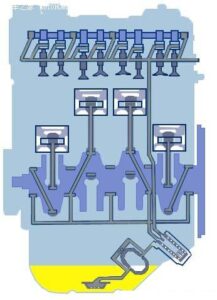
 

The function of the lubrication system is to deliver a specified amount of clean lubricating oil to the surfaces of relatively moving parts, so as to achieve liquid friction, reduce frictional resistance, and alleviate the wear of mechanical components. It also cleans and cools the surfaces of the parts. The lubrication system usually consists of lubricating oil passages, an oil pump, an oil filter, and several valves.

Cooling system
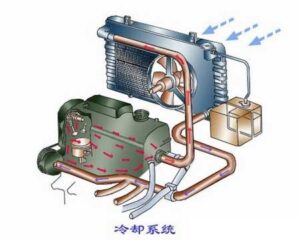
The function of the cooling system is to promptly dissipate part of the heat absorbed by heated components, ensuring the engine operates at the most suitable temperature. The cooling system of a water-cooled engine usually consists of a water jacket, water pump, fan, radiator, thermostat, and other parts.

Ignition system
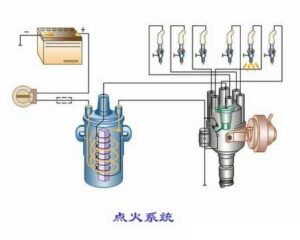
In a gasoline engine, the combustible mixture in the cylinder is ignited by an electric spark. For this purpose, a spark plug is installed on the cylinder head of the gasoline engine, with the tip of the spark plug extending into the combustion chamber. All the equipment that can generate an electric spark between the electrodes of the spark plug at the proper time is called the ignition system. The ignition system usually consists of a storage battery, a generator, a distributor, an ignition coil, spark plugs, and other components.

Starting system
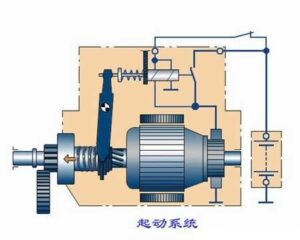
To transition an engine from a stationary state to an operating state, an external force must first be used to rotate the engine’s crankshaft, causing the piston to move back and forth. The combustible mixture inside the cylinder burns and expands to do work, pushing the piston downward to rotate the crankshaft. Only then can the engine run on its own and the working cycle proceed automatically.
 
Therefore, the entire process from when the crankshaft starts to rotate under external force until the engine begins to idle automatically is known as engine starting. The device required to complete the starting process is called the engine starting system.
 

A gasoline engine consists of the above two mechanisms and five systems, namely the crank-connecting rod mechanism, the valve mechanism, the fuel supply system, the lubrication system, the cooling system, the ignition system, and the starting system. A diesel engine consists of the above two mechanisms and four systems, namely the crank-connecting rod mechanism, the valve mechanism, the fuel supply system, the lubrication system, the cooling system, and the starting system. Diesel engines are compression-ignition engines and do not require an ignition system.


An engine is a machine that converts the thermal energy released by fuel combustion into mechanical energy. According to the location where fuel combustion takes place, heat engines can be divided into two categories: internal combustion engines and external combustion engines. There are many types of internal combustion engines, which are usually classified based on different characteristics as follows:
 
  1. By fuel used: gasoline engines, diesel engines, liquefied petroleum gas engines, biogas engines, etc.
  2. By number of strokes per cycle: two-stroke engines, four-stroke engines.
  3. By number of cylinders: single-cylinder engines, multi-cylinder engines.
  4. By cooling method: water-cooled engines, air-cooled engines.
  5. By ignition method: spark-ignition engines, compression-ignition engines.
  6. By rotational speed: high-speed engines, low-speed engines.
  7. By cylinder arrangement: vertical engines, horizontal engines, V-type engines, opposed engines, etc.   
    To facilitate the production management and application of internal combustion engines, China revised and promulgated a national standard (GB725-82) for the naming and model coding methods of internal combustion engines in 1982. The main contents of this standard are as follows:
     
    1. The product names of internal combustion engines are all named according to the fuel they use.
    2. The model numbers of internal combustion engines are composed of Arabic numerals and Chinese Pinyin letters.
    3. The model number of an internal combustion engine consists of the following four parts: the first section, the middle section, the rear section, and the tail section.

Common methods for identifying bearings


With the continuous increase in car ownership in China, the demand for auto parts and automotive supplies has been rising steadily. However, the numerous auto parts and supply stores in Guangzhou are numerous and disorderly, with products of uneven quality. Many counterfeit and shoddy products are mixed in, causing losses to car owners, and in serious cases, even leading to casualties.
 
To help car owners gain a certain understanding of the characteristics of authentic brand-name parts and supplies, starting from this week, a special column titled “Smart Consumer Guide” will be launched in the car owner section to introduce car owners how to identify various types of parts from major automobile brands.
 
It is hoped that with the development of this column, the concept of respecting brands, rejecting counterfeits, and using genuine products will take root in people’s hearts. This is our hope and also the direction of our efforts.
It is no exaggeration to call bearings the “joints” of a car. In a vehicle, not only its four “legs”—the wheels—require bearings, but virtually every rotating mechanical component cannot do without them. They are an extremely inconspicuous yet vital part of the transmission system. Due to their heavy workload, they also experience relatively high wear and tear, making bearing replacement a common task in auto repair. Walking through auto parts markets, you will find countless shops selling bearings of various brands. However, many car owners have wondered: how good is the quality of these bearings, and are they really genuine original equipment manufacturer (OEM) products as labeled on the packaging? Below are several common methods to identify the quality of bearings:
Whether the outer packaging is clear: Under normal circumstances, genuine brands have their own professional designers to create the outer packaging and arrange for factories with qualified production conditions to manufacture it. Therefore, the packaging is very clear and unambiguous in terms of both lines and color blocks. (Some imported brand accessory packaging also features unique designs specifically to protect their intellectual property rights, which will be introduced in detail in subsequent content.)
Clarity of the stamped characters: Brand names, part numbers and other markings are usually stamped on the bearing body. The characters are very small, but genuine products mostly adopt steel stamping technology, with the characters pressed before heat treatment. As a result, the characters are small yet deeply recessed and very clear. By contrast, the characters on counterfeit products are blurry. Due to crude stamping techniques, the characters sit superficially on the surface, and some can even be easily wiped off by hand.
Check for abnormal noise: Hold the inner race of the bearing with your left hand and rotate the outer race with your right hand to listen for any abnormal noise. Most counterfeit products are manufactured under poor conditions using a fully manual workshop process, which inevitably introduces impurities such as sand into the bearing body, resulting in abnormal noise during rotation. This is the most significant difference from genuine branded products that strictly adhere to production standards and use automated machinery.
Check for cloudy oil stains on the surface: Special attention should be paid to this when purchasing imported bearings. Due to the current limitations of domestic anti-rust technology, thick oil residues are often left during the anti-rust treatment of bearing bodies, making them feel sticky when held. In contrast, almost no anti-rust oil traces can be seen on genuine imported foreign bearings. However, experienced experts note that imported bearings emit a distinct odor, confirming the presence of anti-rust oil even though it is invisible.
 
Check for uniform chamfers: The chamfer of a bearing refers to the junction between its horizontal and vertical surfaces. Counterfeit bearings often have poorly finished edges and corners due to constraints in production technology.
How to determine whether the engine can be driven when the alarm is triggered

There are many small components that can trigger the engine warning light, as the engine warning is a relatively broad indicator. It cannot confirm an engine problem on its own; it may even indicate a transmission issue. Of course, the points mentioned above are very straightforward. They are direct causes of the engine warning and relatively easy to understand. At the very least, car owners can follow when a mechanic explains the reasons why the engine light has come on

How to Deal with Common Spark Plug Problems

When the car owner finds scars or damage on the top of the spark plug, or melting and ablation on the electrodes, it indicates that the spark plug has been damaged and should be replaced at this time. light has come on

Sediments sometimes adhere to the top of the spark plug insulator and between the electrodes.

Bearing accuracy and grades
The precision of rolling bearings is divided into (main) dimensional precision and rotational precision. The precision grades have been standardized, classified into five grades: P0, P6, P5, P4, and P2.
 
Precision increases sequentially starting from Grade 0. Grade 0 is sufficient for general applications, but Grade 5 or higher precision is required when used under the conditions or occasions shown in Table 1.
 
Although the above precision grades are formulated based on ISO standards, their designations vary in national standards of different countries.
What is a disc brake, and what is a drum brake?
There are two types of braking systems: disc brakes and drum brakes. Disc brakes can be further divided into solid disc brakes and ventilated disc brakes. Disc brakes, caliper disc brakes, and friction plate brakes all fall into the category of disc brakes.
 
The working principle of disc brakes is similar to that of ordinary bicycle brakes — the brake pads on the calipers interact with the brake disc connected to the wheel during braking until the wheel stops rotating. Ventilated discs are designed with holes on the brake disc to help dissipate heat using the natural airflow generated during driving. The working principle of drum brakes is similar to the “expanding brake” of bicycles — the basin-shaped brake drum is connected to the wheel, and the crescent-shaped brake pads are pushed upward by the connecting rod to stop the wheel.

ards of different countries.

Like this post? Share it on:

Table of Contents

Like this post? Share it on:

I’m Leo, the head of sales team at cowin. Me and my team would be happy to meet you and learn all about your business, requirements and expectations.

Carson
Paul
Tom
logo

Get More Benefits Since Submit The Info Form

Don’t worry, we won’t fill your inbox with spam”we can’t stand that either.

logo

Get More Benefits Since Submit The Info Form

I’m Leo, the head of sales team at Cowin. Me and my team would be happy to meet you and learn all about your business, requirements and expectations.
Carson
Paul
Tom

*We respect your confidentiality and all information are protected.

Latest Articles for You

Suspension System

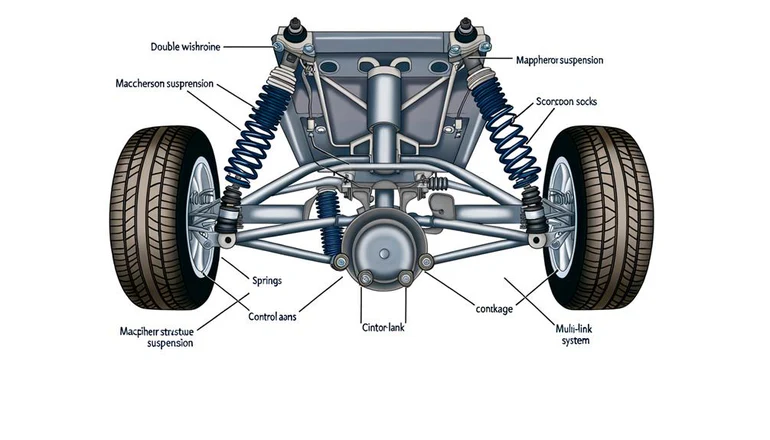
The suspension system is composed of coordinated components such as elastic elements (springs), dampers, and guiding mechanisms (control arms, stabilizer bars), appeg simple yet concealing intricate logic. Elastic elements absorb road impacts, dampers attenuate vibration amplitude, and guiding mechanisms ensure the correct wheel motion trajectory; the seamless cooperation of these thelements not only mitigates the jolts from bumpy roads but also maintains vehicle body posture during steering and braking, preventing roll and pitch, thereby balancing comfort

Read More »

Clutch System

High-quality automotive clutch system featuring wear-resistant special material friction plates, designed for high-temperature resistance and reduced wear. Coupled with an optimized diaphragm spg design, it ensures uniform clamping force, delivering precise disengagement and smooth engagement. This guarantees stable torque transmission, maintaining long-term durability even under harsh operating conditions. By significantly reducing ovele operating costs, it is suitable for a wide range of vehicle types, including heavy-duty trucks and passenger cars.

Read More »

Brake System

Professional-grade automotive braking system, featuring a disc brake structure (or custom drum option), with brake discs manufactured using an integrated forging process for excelle dissipation. The brake pads are made of ceramic composite wear-resistant material, offering high-temperature resistance, anti-abrasion properties, stable friction coefficients, and efficient braking force transon. Equipped with high-precision brake calipers and seals, the system achieves a braking response time ≤0.3 seconds and a braking distance (fro 100km/h) ≤38 meters. It features Anti-lock Braking System (ABS) and Electronic Brake-force Distribution (EBD) to effectively prevent brake pull and wheel lock-up. Compaible with 220-240V electric vehicles, it balances braking performance, structural durability, and safety reliability, suitable for high-end passenger cars, heavy-duty commercial vehicles, and speose vehicles.

Read More »

Body system

Covering two major types, monocoque and body-on-frame, it offers customizable solutions tailored to vehicle types (passenger cars, commercial vehicles, special-purpoehicles) and usage conditions (private, commercial, off-road). Body accessories can be flexibly combined with configurations such as electric windows, central locking, and electric mirrors to enhance driving convenieand meet the personalized needs of different customers.

Read More »

Ignition Start System

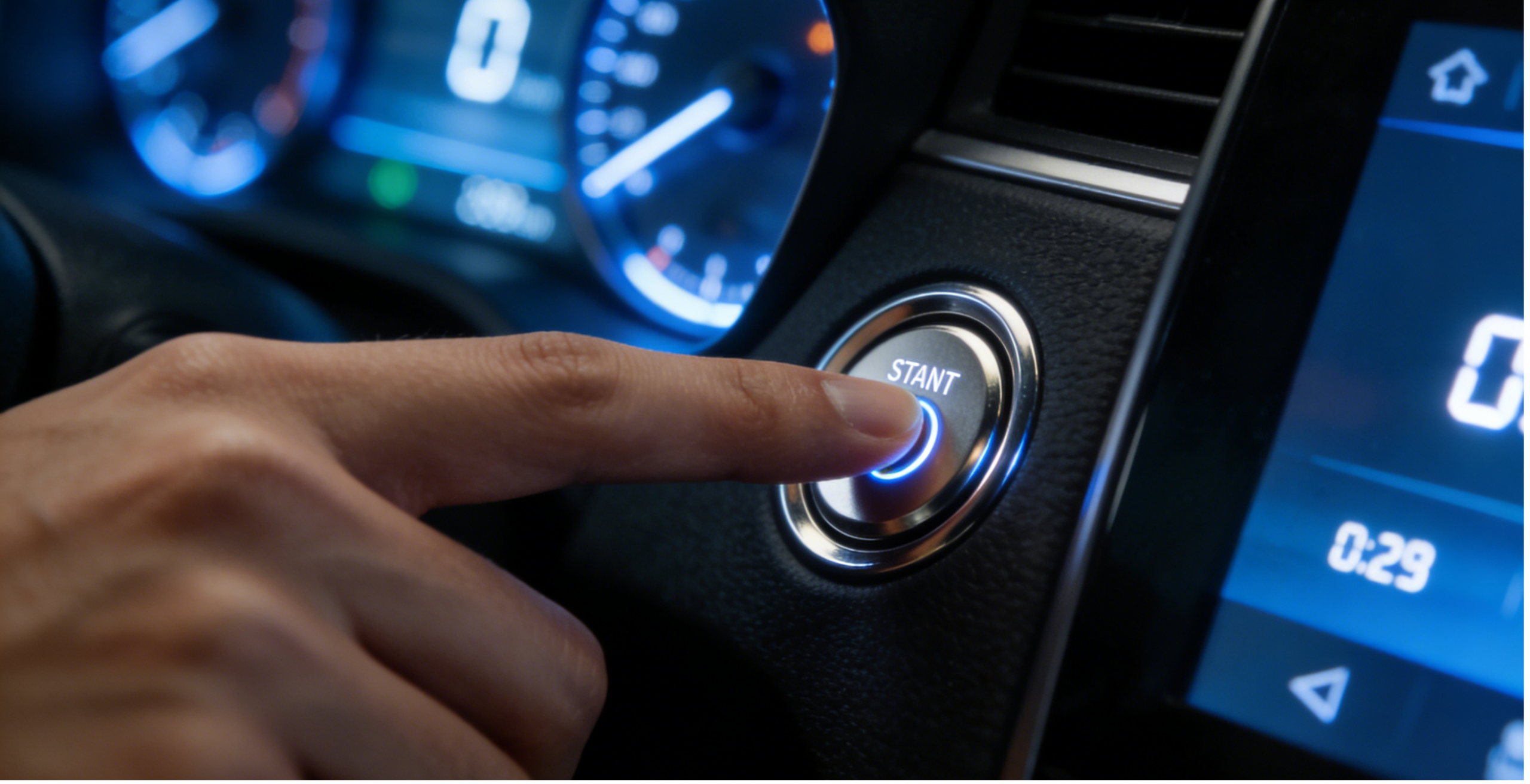
From key ignition to push-button start, the evolution of ignition systems has always centered on convenience and reliability. Traditional key ignition relies on mechanical keys to triggts, offering a simple operation; push-button start systems utilize sensor recognition, eliminating the need to insert a key and allowing for ignition with a simple press, making them suitable for modern intellige. Regardless of the ignition method, the core mission remains to ensure rapid engine ignition and stable operation, preventing issues such as failed starts or poor ignition, and safeguarding every smo

Read More »

Cooling System

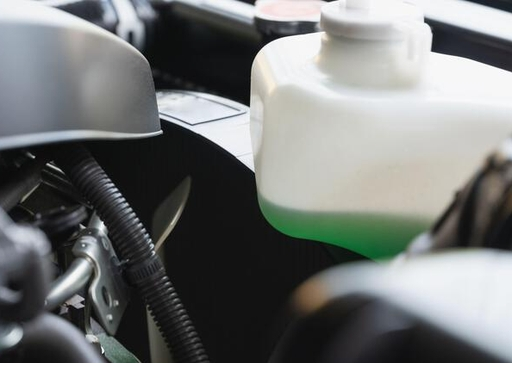
Professional-grade automotive cooling system featuring a high-efficiency tube-and-fin radiator with a large heat dissipation area and high efficiency, capable of a cing power of 5-20kW to meet the needs of engines with different displacements. The water pump employs a precision bearing design with stable rotation speed and controllableflow rate (5-15L/min), ensuring excellent sealing performance and eliminating leakage risks; the thermostat offers temperature control accuracy ≤±2℃, enabling precise switching between large and small circulatps to ensure rapid engine warm-up and stable heat dissipation. The cooling fan features intelligent temperature control, automatically adjusting its speed (100r/min) based on coolant temperature, with noise ≤55dB for energy-saving and quiet operation. Core components are made of corrosion-resistant and high-temperature special materials, having undergone multiple ets including high/low temperature, cyclic fatigue, and salt spray corrosion. Compatible with 12V/24V vehicle voltages, it balances heat dissipation performance, structura durability, and energy efficiency, suitable for high-end passenger cars, commercial vehicles, special vehicles, and various other scenarios..

Read More »
logo

Get More Benefits Since Submit The Info Form

*We respect your confidentiality and all information are protected.

Contact Us Right Now, Get Reply Today.

I’m Leo, the head of sales team at Cowin . Me and my team would be happy to meet you and learn all about your business, requirements and expectations.
Carson
Paul
Tom

Contact us