Body system

Covering two major types, monocoque and body-on-frame, it offers customizable solutions tailored to vehicle types (passenger cars, commercial vehicles, special-purpoehicles) and usage conditions (private, commercial, off-road). Body accessories can be flexibly combined with configurations such as electric windows, central locking, and electric mirrors to enhance driving convenieand meet the personalized needs of different customers.

Lubricants Giant Sells 2,000 Stores for 8.9 Billion , but Keeps an Ace Up Its Sleeve?


       In the past few days, Shell has made a major move: it sold Jiffy Lube, North America’s largest quick oil change chain with over 2,000 stores under its banner, for 1.3 billion US dollars (approximately 8.9 billion RMB). The buyer is private equity firm Monomoy Capital Partners.
 
As soon as the news broke, many people’s first reaction was: Is the global lubricants giant struggling? Is it planning to retreat from the market?
 
But a close look into the transaction details reveals another underlying message: Shell is not retreating, but rather making a strategic shift.
 
Moreover, it has kept a backup plan in reserve.
         

I. What Is Sold Is “Physical Stores”, What Is Retained Is “Lifeblood”

 
First, let’s clarify exactly what Shell has sold.
 
Many people are misled by the statement of “divesting part of its lubricants business”, assuming Shell is selling its core lubricants business. In fact, what it sold is Jiffy Lube, a service network asset focused on oil changes, quick repairs and minor vehicle maintenance.
 
So what did it keep?
 
Shell retained all its core lubricant brands including Pennzoil, Quaker State and Rotella; it kept its lubricant marketing, manufacturing and distribution infrastructure across North America; and it signed a long-term lubricant supply agreement with the buyer.
 
Put simply: It no longer runs the physical stores, but it still supplies all the lubricants they use.
 
This strategy is known as “selling stores while retaining supply”. It sheds the burden of heavy asset operation while firmly holding control over the supply chain.

II. Why It Is a Strategic Reserve Move

 
Jiffy Lube is indeed a quality asset, with annual sales accounting for 6.5% of Shell’s lubricant sales in the United States and Canada. However, it is also a typical low-growth business facing multiple pressures such as rising rent, surging labor costs and the transition to gasoline-electric vehicles.
 
Shell’s profit dropped by 22% in 2025, and its chemical division posted losses for four consecutive years. At this juncture, swapping 2,000 physical stores for 1.3 billion US dollars in cash allows the company to invest in higher-return sectors such as new energy, hydrogen energy and nuclear fusion. The business logic is crystal clear.
 
More crucially, there is the long-term lubricant supply agreement.
 
The new owner Monomoy is a private equity firm adept at store operation but with no lubricant production capacity. Shell remains the upstream supplier for this sales channel. The stores may change ownership, but car owners will still see the iconic yellow Shell logo when getting oil changes.
 
By shifting from a “landlord” to a “supplier”, Shell has lightened its assets without losing market control.

III. Shell’s Move Offers Valuable Lessons for the Industry

 
  1. Never regard the number of physical stores as a moat. Stores can be either assets or liabilities, and a larger scale does not necessarily mean greater security.
  2. Clearly define whether you are selling products or a service network. The real value lies not in how many stores you own, but in how many stores rely on your supply.
  3. Asset-light control is often a better solution. Influencing terminal outlets through brand licensing and fuel supply agreements comes with lower costs and greater operational flexibility.
 
One-sentence comment: Shell has sold off its operational burdens and retained its core lifeline. It has shifted from the heavy-asset “landlord” model to an asset-light “brand + supply chain” model, handing over store operations to professional operators while retreating to the upstream end to sustain steady revenue streams.
 
Do you think domestic chain brands will follow this “sell stores while retaining supply” strategy? Feel free to share your views in the comment section.



Table of Contents

Like this post? Share it on:

I’m Leo, the head of sales team at cowin. Me and my team would be happy to meet you and learn all about your business, requirements and expectations.

Carson
Paul
Tom
logo

Get More Benefits Since Submit The Info Form

Don’t worry, we won’t fill your inbox with spam”we can’t stand that either.

logo

Get More Benefits Since Submit The Info Form

I’m Leo, the head of sales team at Cowin. Me and my team would be happy to meet you and learn all about your business, requirements and expectations.
Carson
Paul
Tom

*We respect your confidentiality and all information are protected.

Latest Articles for You

Suspension System

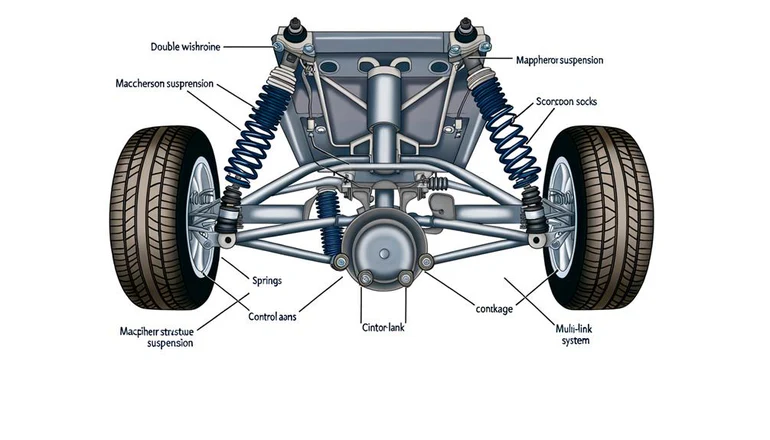
The suspension system is composed of coordinated components such as elastic elements (springs), dampers, and guiding mechanisms (control arms, stabilizer bars), appeg simple yet concealing intricate logic. Elastic elements absorb road impacts, dampers attenuate vibration amplitude, and guiding mechanisms ensure the correct wheel motion trajectory; the seamless cooperation of these thelements not only mitigates the jolts from bumpy roads but also maintains vehicle body posture during steering and braking, preventing roll and pitch, thereby balancing comfort

Read More »

Clutch System

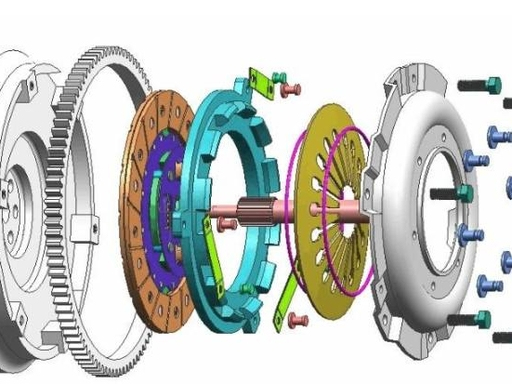
High-quality automotive clutch system featuring wear-resistant special material friction plates, designed for high-temperature resistance and reduced wear. Coupled with an optimized diaphragm spg design, it ensures uniform clamping force, delivering precise disengagement and smooth engagement. This guarantees stable torque transmission, maintaining long-term durability even under harsh operating conditions. By significantly reducing ovele operating costs, it is suitable for a wide range of vehicle types, including heavy-duty trucks and passenger cars.

Read More »

Brake System

Professional-grade automotive braking system, featuring a disc brake structure (or custom drum option), with brake discs manufactured using an integrated forging process for excelle dissipation. The brake pads are made of ceramic composite wear-resistant material, offering high-temperature resistance, anti-abrasion properties, stable friction coefficients, and efficient braking force transon. Equipped with high-precision brake calipers and seals, the system achieves a braking response time ≤0.3 seconds and a braking distance (fro 100km/h) ≤38 meters. It features Anti-lock Braking System (ABS) and Electronic Brake-force Distribution (EBD) to effectively prevent brake pull and wheel lock-up. Compaible with 220-240V electric vehicles, it balances braking performance, structural durability, and safety reliability, suitable for high-end passenger cars, heavy-duty commercial vehicles, and speose vehicles.

Read More »

Body system

Covering two major types, monocoque and body-on-frame, it offers customizable solutions tailored to vehicle types (passenger cars, commercial vehicles, special-purpoehicles) and usage conditions (private, commercial, off-road). Body accessories can be flexibly combined with configurations such as electric windows, central locking, and electric mirrors to enhance driving convenieand meet the personalized needs of different customers.

Read More »

Ignition Start System

From key ignition to push-button start, the evolution of ignition systems has always centered on convenience and reliability. Traditional key ignition relies on mechanical keys to triggts, offering a simple operation; push-button start systems utilize sensor recognition, eliminating the need to insert a key and allowing for ignition with a simple press, making them suitable for modern intellige. Regardless of the ignition method, the core mission remains to ensure rapid engine ignition and stable operation, preventing issues such as failed starts or poor ignition, and safeguarding every smo

Read More »

Cooling System

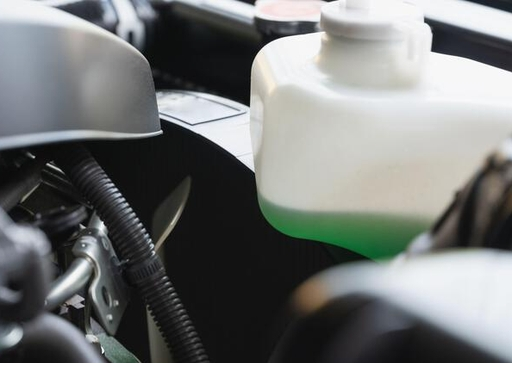
Professional-grade automotive cooling system featuring a high-efficiency tube-and-fin radiator with a large heat dissipation area and high efficiency, capable of a cing power of 5-20kW to meet the needs of engines with different displacements. The water pump employs a precision bearing design with stable rotation speed and controllableflow rate (5-15L/min), ensuring excellent sealing performance and eliminating leakage risks; the thermostat offers temperature control accuracy ≤±2℃, enabling precise switching between large and small circulatps to ensure rapid engine warm-up and stable heat dissipation. The cooling fan features intelligent temperature control, automatically adjusting its speed (100r/min) based on coolant temperature, with noise ≤55dB for energy-saving and quiet operation. Core components are made of corrosion-resistant and high-temperature special materials, having undergone multiple ets including high/low temperature, cyclic fatigue, and salt spray corrosion. Compatible with 12V/24V vehicle voltages, it balances heat dissipation performance, structura durability, and energy efficiency, suitable for high-end passenger cars, commercial vehicles, special vehicles, and various other scenarios..

Read More »
logo

Get More Benefits Since Submit The Info Form

*We respect your confidentiality and all information are protected.

Contact Us Right Now, Get Reply Today.

I’m Leo, the head of sales team at Cowin . Me and my team would be happy to meet you and learn all about your business, requirements and expectations.
Carson
Paul
Tom

Contact us