As software-defined vehicles move from concept to large-scale implementation, the drawbacks of the traditional distributed architecture have become increasingly prominent. Issues such as high complexity, cross-domain data silos, and difficulties in deploying AI functions caused by the scattered layout of dozens or even hundreds of ECUs have become core bottlenecks restricting industry upgrading.
Against this backdrop, the emergence of highly integrated central computing processors is driving a critical leap in automotive electronic and electrical architecture from “distributed domain control” to “central computing”, reshaping the competitive landscape of the industry.
From decentralization to centralization: the core logic for addressing industry pain points
“Vehicles are becoming increasingly complex today, with more functions embedded in them. Consumers expect access to the latest technologies in their cars, enabling feature updates, upgrades, and even personalized customization. However, in hardware-defined vehicles, modifying a single function may require adjustments to 10 ECUs and 50 software modules, posing a huge challenge for automakers.” Jens Hinrichsen, Executive Vice President and General Manager of Analog and Automotive Embedded Systems at NXP Semiconductors, stated frankly at a recent media briefing.
He pointed out that, in light of this, automakers must advance vehicle digitalization by decoupling functions from hardware and implementing them through software. This way, feature updates can be rapidly completed via central computing, which in turn requires a powerful in-vehicle computing platform as support.
This is precisely why NXP has launched the S32N7 highly integrated processor. Its core logic is to achieve centralized control of core vehicle functions, break down barriers between domains, and usher in a new era of automotive digitalization.
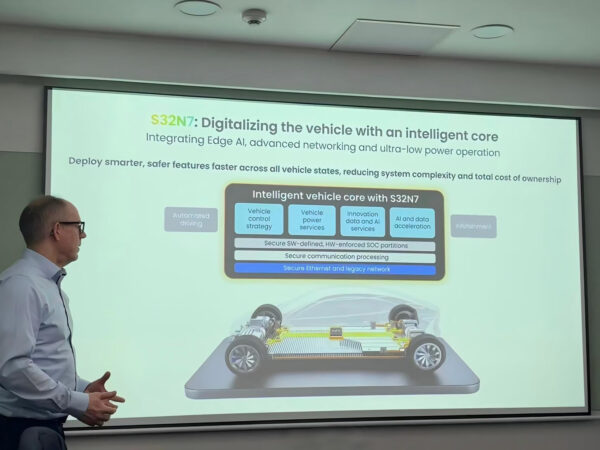
From a technical underlying perspective, the S32N7 is built on the same 5-nanometer technology platform as the S32N55. This advanced process not only delivers performance improvements but also achieves extreme integration. It enables centralized control of the powertrain, vehicle dynamics, body, gateway, and safety domains on a single chip, integrating software and data into the vehicle’s core centralized hub while meeting high standards of functional safety and cybersecurity, significantly reducing system complexity.
The S32N7 is equipped with 20 independent compute engines, including 8 Arm® Cortex®-A78AE application cores and 12 Arm® Cortex®-R52 real-time cores. Each core can operate independently; when one core handles functionally safety-critical tasks, it remains unaffected by other cores, truly achieving zero latency and a high level of functional safety.
Jens Hinrichsen noted that core automotive functions such as chassis, powertrain, and body serve as the foundation of a vehicle, representing the essence of what makes a vehicle a vehicle. These functions must possess extremely high robustness, functional safety, and cybersecurity, while also requiring ultra-high real-time processing capabilities and zero-latency performance.
Meanwhile, the S32N7 also boasts remarkable highlights in AI deployment. Its AI capabilities are specifically tailored for the core functions of vehicles. It is reported that it is equipped with a built-in eIQ®Neutron NPU, with a basic computing power of approximately 2 TOPS. Jens Hinrichsen stated that although this computing power is not outstanding, it is sufficient to support the core AI functions of vehicles.
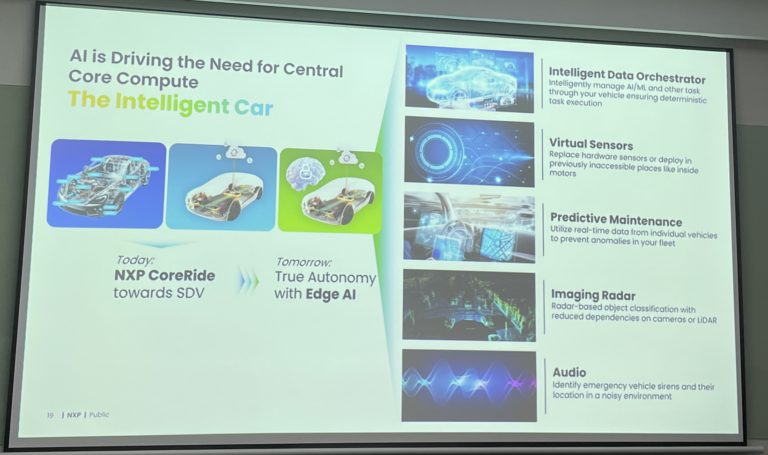
Specifically, it supports practical scenarios such as battery anomaly detection, predictive maintenance, and intelligent energy management. For example, AI algorithms are used to monitor the thermal energy consumption of battery cells in real time and predict the risk of thermal runaway in advance; or to intelligently turn off unnecessary functions during driving, reducing energy consumption and extending range without the driver’s awareness.
More importantly, its built-in PCI Express interface supports the connection of additional AI chips (for instance, four Kinara chips can deliver 160 TOPS of computing power), reserving ample room for future AI function expansion and ensuring upgrades to the latest AI chips without redesigning the entire vehicle architecture.
For automakers, the core value of the S3N7 lies in tangible benefits. By reducing dozens of hardware modules and optimizing wiring and electronic devices, it can help automakers cut their total cost of ownership (TCO) by up to 20%.
Jens Hinrichsen explained in detail the origin of this data: “We compared the BOM costs of distributed and centralized architectures, covering the entire chain of costs including semiconductors, wiring harnesses, ECUs, software, and software licenses, and finally concluded that the total cost of ownership can be reduced by approximately 20%.”
He further emphasized that the greatest advantage of cost savings lies in architectural reusability: “This reusability supports software updates based on existing hardware, and through OTA upgrades throughout the vehicle’s lifecycle, the benefits of reduced TCO from reusability can be continuously enjoyed.”
In addition, the S32N7 supports hardware and software scalability across vehicle models and brands, helping automakers establish foundational platforms, expand AI-driven innovations across the entire vehicle, and accelerate the implementation of software-based business models.
Ecological Synergy: The Key Variable to Breaking Through Mass Production Applications
The large-scale application of central computing chips is never a solo act by a single enterprise; instead, it requires Tier 1 suppliers, automakers, and chip manufacturers to form ecological synergy. Although the S32N7 boasts remarkable technological advantages, moving from chip samples to mass production and vehicle deployment still entails overcoming multiple challenges such as ecological adaptation, migration of customers’ existing ecosystems, and control over mass production schedules.
Bosch’s early entry has served as a crucial breakthrough. As the first Tier 1 supplier to deploy the S32N7 in vehicle integration platforms, Bosch has carried out in-depth cooperation with NXP, jointly developing reference designs, safety frameworks, hardware integration solutions, and expert enablement programs. This accelerates system deployment and reduces the integration workload for early adopters.
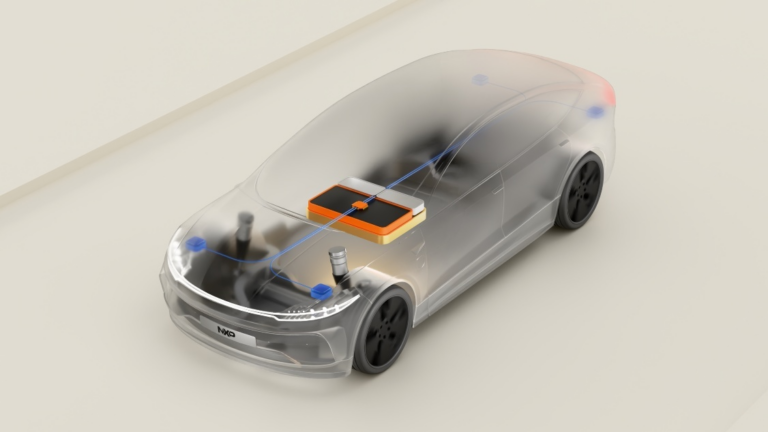
Currently, Bosch is building a vehicle architecture based on the S32N7 and developing an industry demonstration platform to fully showcase the chip’s core advantages.
In addition, NXP has equipped the S32N7 with a complete software toolchain and middleware support, including the MotionWise middleware by TTTech Auto, helping automakers rapidly complete software adaptation and functional development while shortening time-to-market.
The difficulty of migrating customers’ existing ecosystems represents the core challenge in the market promotion of the S32N7. Today, automakers have established mature control ecosystems in areas such as powertrain and chassis, with each component featuring a dedicated hardware and software system. Compatibility issues have become a major obstacle in the migration process.
“The industry urgently needs to simplify vehicle sub-ecosystems, and the complete architecture and software platform provided by the S32N7 can help automakers gradually migrate edge node functions to central computing units,” Jens Hinrichsen stated. Although this process takes time, the trend is irreversible, much like the integration processes experienced in the computer, server, and mobile phone industries. The automotive sector, however, is more complex and requires a longer transition period.
The industry urgently needs to simplify the vehicle sub-ecosystem, and the complete architecture and software platform provided by S32N7 can help automakers gradually migrate edge node functions to central computing units,” said Jens Hinrichsen. He added that although this process takes time, the trend is irreversible, much like the integration processes experienced by the computer, server, and mobile phone industries—only the automotive industry is more complex and requires a longer transition cycle.
Regarding mass production schedules, Jens Hinrichsen revealed a general plan in an interview with Gasgoo: “A relatively simplified version of S32N7 is expected to enter the market by the end of 2027 or early 2028, and the full version of S32N7 will be launched shortly thereafter.”
Notably, NXP regards the Chinese market as a key battleground for the large-scale application of S32N7. Jens Hinrichsen told Gasgoo that Chinese automakers have shown strong interest in S32N7 and are also the most active in the implementation of AI applications.
There are two core reasons behind this: on the one hand, competition in China’s new energy vehicle market is fierce, and automakers need to achieve differentiation through architecture upgrades. The cross-vehicle and cross-brand scalability of S32N7 helps them rapidly expand their product portfolios and international businesses; on the other hand, Chinese automakers are more aggressive in AI applications and require a reliable AI platform to deeply integrate AI functions into core vehicle functionalities.
Chain reaction, architectural transformation reshaping industry landscape
Each iteration of automotive electronic and electrical architecture triggers a profound restructuring of the industrial chain. From distributed ECUs to domain controllers and then to central computing, the automotive industry is undergoing a full-chain transformation covering technological routes, business models and division of labor systems. The development of central computing chips will serve as the core catalyst for this transformation.
The design philosophy of the S32N7 fully embodies foresight into the long-term evolution of the industry. Jens Hinrichsen emphasized: “The S32N7 is not designed for a single generation of vehicles, but reserves ample space for the long-term evolution of software-defined vehicles.”
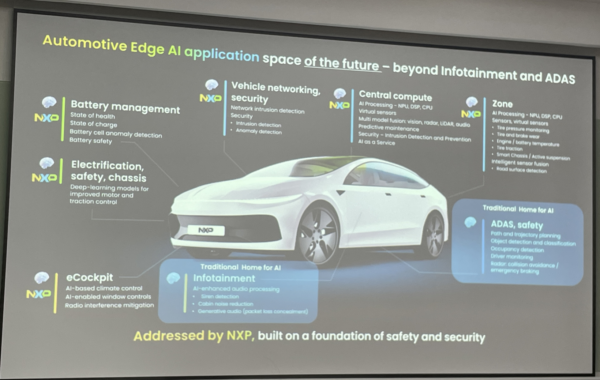
Its built-in PCI Express interface enables flexible expansion of AI computing power. Automakers can support the upgrade from L2 to L3 autonomous driving without reconstructing the entire vehicle architecture. Meanwhile, its always-online AI functions can operate stably even when the ADAS or IVI processors are turned off.
Such “scalable and upgradable” features precisely align with the core requirements of software-defined vehicles. They allow automakers to continuously push new functions via OTA on the basis of existing hardware, extending the lifecycle value of vehicles and making the product form of “lifetime upgradable” cars possible.
The restructuring of business models is breaking down the boundaries of traditional industries. In the past, automakers’ profit models mainly relied on hardware sales, with most software functions delivered on a one-time basis, making it difficult to generate sustained revenue after vehicles were sold.
The emergence of the central computing architecture has made it possible for automakers to continuously push new features via OTA updates and realize “software monetization” by virtue of centralized computing power and full-vehicle data access authority. This transformation from “hardware sales” to “hardware + software + services” will not only reshape the profit structure of automakers but also drive the industry to form a new business model of “hardware as the foundation, software as the soul, and services as the wings”, unlocking long-term revenue potential.
The division of labor in the industrial chain is undergoing profound changes. For Tier 1 suppliers, it is imperative to transform into “system solution providers” and offer automakers integrated solutions by integrating chip, software and hardware resources.
For automotive chip companies, the focus of competition has shifted from single performance parameters to a comprehensive competition in integration, real-time performance, functional safety, AI scalability and ecological integrity, further raising technical barriers.
Notably, the widespread adoption of central computing architectures will also accelerate the application of the RISC-V architecture in the automotive sector.
Jens Hinrichsen revealed at the communication meeting: “Currently, NXP’s microcontrollers and microprocessors for customers all adopt Arm® Cortex® cores, which represent the optimal ecosystem choice we can offer customers at present. However, at the backend operation level invisible to consumers, hidden cores including DSPs have already been using the RISC-V architecture.”
He added: “We are vigorously promoting the improvement of the RISC-V ecosystem. When the RISC-V ecosystem is fully ready, we will provide relevant support to customers in a timely manner. Until then, NXP must ensure that it delivers stable and reliable Arm core products to customers.”
From the perspective of the industry’s long-term development, the popularization of central computing architectures is an inevitable choice for the automotive industry to transform toward electrification, intelligence, and connectivity. The emergence of chips such as the S32N7 provides key technical support for this transformation.
Although challenges such as ecosystem adaptation and technology migration still require time to overcome, it is undeniable that the era of central computing has begun. In the future, only enterprises that can accurately grasp technological trends, build collaborative ecosystems, and quickly respond to market demands will gain an edge in this industrial restructuring and lead the direction of industry development.