Layout of new energy sources

The global coalition of environmental protection, labor, and human rights organizations "Lead the Charge" released the green ranking of automotive supply chains. Tesla, Ford, and Volvo Cars, with their solid practices, are leading the global clean transformation of electric vehicle supply chains. This list not only outlines the current pattern of green transformation among automotive companies but also contains the underlying logic of how the EU's green rules are reshaping the global automotive industry.

Layout of new energy sources

Automotive Parts Industry: Changes in the Eight Major Markets Over the Past Five Years and Representative Enterprises in Each Region

      Between 2019 and 2024, the global auto parts industry underwent profound changes and development, entering a critical transformation period. The market size continued to grow, rising from approximately US$1.4 trillion in 2019 to about US$1.7 trillion in 2024, representing a compound annual growth rate of around 4%. In terms of sales volume, it increased from roughly 5 billion units in 2019 to nearly 5.5 billion units in 2024. Behind this growth are the continuous rise in the global number of motor vehicles and the rapid innovation of automotive technology. The emergence of new energy vehicles and intelligent connected vehicles has driven a sharp increase in demand for related components, such as the market demand for core parts including batteries, electric motors, and electronic control systems, as well as the development of intelligent connected components like sensors and intelligent cockpit equipment.

      Against the backdrop of the overall landscape of the global auto parts market, various segmented product sectors are also undergoing their own unique development trajectories. As key components of a vehicle’s core powertrain system, engine electrical parts saw their market size expand from approximately 150 billion US dollars in 2019 to around 180 billion US dollars in 2024, representing a compound annual growth rate of roughly 3.5%. The market size of traditional parts such as spark plug wires, generators, and starters has maintained steady growth, mainly driven by replacement demand arising from the increase in car parc. Meanwhile, as engine technology evolves toward higher efficiency and energy conservation, the market size of critical components such as ignition modules has grown even more significantly.

      As a major global automotive market, the United States has a well-developed and large-scale auto parts industry. From 2019 to 2024, the scale of the U.S. auto parts market continued to expand, growing from approximately $380 billion in 2019 to around $450 billion in 2024, representing a compound annual growth rate of roughly 3.5%. Driven by trends such as electrification transformation and supply chain localization, the U.S. auto parts market has exhibited a distinctive development momentum. In terms of electrification transformation, the U.S. government has actively promoted the development of new energy vehicles, creating new business opportunities for local parts manufacturers. Amid the process of supply chain localization, federal incentives under the U.S. Inflation Reduction Act and the Bipartisan Infrastructure Law have encouraged some automakers to further localize their supply chains.

      The scale of the European auto parts market is also considerable, maintaining a steady development momentum from 2019 to 2024. Against the backdrop of the development of new energy vehicles and increasingly stringent environmental regulations, the European auto parts industry is undergoing profound changes. European countries are actively promoting the development of new energy vehicles and setting strict carbon emission targets, prompting automakers to accelerate their transition to new energy. At the same time, stricter environmental regulations have put forward higher requirements for vehicle exhaust emissions and the environmental friendliness of materials, driving auto parts to develop in an environmentally friendly and efficient direction.

       The scale of Russia’s auto parts market experienced certain fluctuations from 2019 to 2024. Affected by factors such as geopolitical and economic conditions, the market developed amid fluctuations. Meanwhile, sanctions disrupted the supply of imported parts, prompting Russia to step up the development of its local auto parts industry. The government introduced a series of policies to support local enterprises, enhance the production capacity of domestic parts, and reduce reliance on imported components.

          The automotive parts market in Japan and South Korea exhibited a steady growth trend from 2019 to 2024The region’s highly developed domestic automotive industry, coupled with globally competitive brands such as Toyota, Honda, Hyundai-Kia, and others, provided robust support for the growth of the local automotive ts sector.

          The Southeast Asian automotive parts market demonstrated significant growth potential during the 2019-2024 period, characterized by sustained rapid expansion. Driven by gion’s rapid economic development, large population, and increasing vehicle ownership, the market has been afforded substantial room for growth.

         The South American automotive parts market experienced fluctuations rom 2019 to 2024. Economic disparities across the region, coupled with slow growth and high inflation in certain countries, posed challenges to the industry. Conversely, some nations have implemented econ reforms and introduced policies to promote the automotive sector, thereby creating opportunities for the parts industry.

         The Middle Eastern automotive parts market maintained a stable development trajectory fom 2019 to 2024. Benefiting from the region’s developed energy economy and abundant oil resources, consumers possess strong purchasing power. Consequently, the automotive market is dominated by high-es, resulting in a significant demand for premium automotive parts. Currently,the African automotive parts market remains relatively small but holds immense potential for growth. Ongoing infrastructure development and increasing vehicle penetration ng favorable conditions for the expansion of the automotive parts industry.

        In addition, the global automotive parts industry has seen the emergence of many renowned associations and enterprises, such as the National Automotive Parts Association (NAPA), the Europeansociation of Automotive Suppliers (CLEPA), the Russian Automotive Business Association, the Korea Auto Parts Industry Association (KAPIA), the ASEAN Automotive Federation, the Mexican National Association oanufacturers and Distributors (INA), the Iran Auto Parts Manufacturers Association (IAPMA), and the National Association of Automobile Manufacturers of South Africa (NAAMSA). These assoc have played a significant role in promoting the development of the automotive parts industry, strengthening cooperation among enterprises, and formulating industry standards.


          Lear (US), AutoZone, Advance Auto Parts, Bosch and ZF (Europe), KAMAZ and GAZ Group (Russia), HYUNDAI MOBIS and Denso (Japan and South Korea), Thai Summit Group, AutoPair, EggMall (Southeast Asia), Marcopolo, DPaschoal, Flex Auto Parts (South America), Al Nabooda Auto Parts, Al Rabee Al Akhder, Abdullah Al Othaim Motors (the Middle East), Metair Investments, Barloworld Automotive, Autoquip (Africa) and other enterprises are well-known auto parts companies in their respective regions or globally, and have made important contributions to the development of the auto parts industry.


Table of Contents

Like this post? Share it on:

I’m Leo, the head of sales team at cowin. Me and my team would be happy to meet you and learn all about your business, requirements and expectations.

Carson
Paul
Tom
logo

Get More Benefits Since Submit The Info Form

Don’t worry, we won’t fill your inbox with spam”we can’t stand that either.

logo

Get More Benefits Since Submit The Info Form

I’m Leo, the head of sales team at Cowin. Me and my team would be happy to meet you and learn all about your business, requirements and expectations.
Carson
Paul
Tom

*We respect your confidentiality and all information are protected.

Latest Articles for You

Suspension System

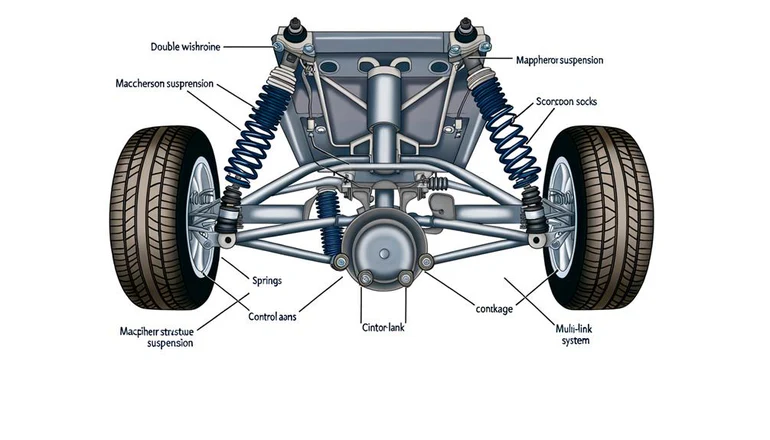
The suspension system is composed of coordinated components such as elastic elements (springs), dampers, and guiding mechanisms (control arms, stabilizer bars), appeg simple yet concealing intricate logic. Elastic elements absorb road impacts, dampers attenuate vibration amplitude, and guiding mechanisms ensure the correct wheel motion trajectory; the seamless cooperation of these thelements not only mitigates the jolts from bumpy roads but also maintains vehicle body posture during steering and braking, preventing roll and pitch, thereby balancing comfort

Read More »

Clutch System

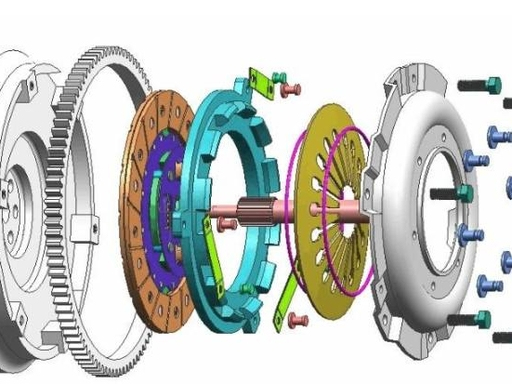
High-quality automotive clutch system featuring wear-resistant special material friction plates, designed for high-temperature resistance and reduced wear. Coupled with an optimized diaphragm spg design, it ensures uniform clamping force, delivering precise disengagement and smooth engagement. This guarantees stable torque transmission, maintaining long-term durability even under harsh operating conditions. By significantly reducing ovele operating costs, it is suitable for a wide range of vehicle types, including heavy-duty trucks and passenger cars.

Read More »

Brake System

Professional-grade automotive braking system, featuring a disc brake structure (or custom drum option), with brake discs manufactured using an integrated forging process for excelle dissipation. The brake pads are made of ceramic composite wear-resistant material, offering high-temperature resistance, anti-abrasion properties, stable friction coefficients, and efficient braking force transon. Equipped with high-precision brake calipers and seals, the system achieves a braking response time ≤0.3 seconds and a braking distance (fro 100km/h) ≤38 meters. It features Anti-lock Braking System (ABS) and Electronic Brake-force Distribution (EBD) to effectively prevent brake pull and wheel lock-up. Compaible with 220-240V electric vehicles, it balances braking performance, structural durability, and safety reliability, suitable for high-end passenger cars, heavy-duty commercial vehicles, and speose vehicles.

Read More »

Body system

Covering two major types, monocoque and body-on-frame, it offers customizable solutions tailored to vehicle types (passenger cars, commercial vehicles, special-purpoehicles) and usage conditions (private, commercial, off-road). Body accessories can be flexibly combined with configurations such as electric windows, central locking, and electric mirrors to enhance driving convenieand meet the personalized needs of different customers.

Read More »

Ignition Start System

From key ignition to push-button start, the evolution of ignition systems has always centered on convenience and reliability. Traditional key ignition relies on mechanical keys to triggts, offering a simple operation; push-button start systems utilize sensor recognition, eliminating the need to insert a key and allowing for ignition with a simple press, making them suitable for modern intellige. Regardless of the ignition method, the core mission remains to ensure rapid engine ignition and stable operation, preventing issues such as failed starts or poor ignition, and safeguarding every smo

Read More »

Cooling System

Professional-grade automotive cooling system featuring a high-efficiency tube-and-fin radiator with a large heat dissipation area and high efficiency, capable of a cing power of 5-20kW to meet the needs of engines with different displacements. The water pump employs a precision bearing design with stable rotation speed and controllableflow rate (5-15L/min), ensuring excellent sealing performance and eliminating leakage risks; the thermostat offers temperature control accuracy ≤±2℃, enabling precise switching between large and small circulatps to ensure rapid engine warm-up and stable heat dissipation. The cooling fan features intelligent temperature control, automatically adjusting its speed (100r/min) based on coolant temperature, with noise ≤55dB for energy-saving and quiet operation. Core components are made of corrosion-resistant and high-temperature special materials, having undergone multiple ets including high/low temperature, cyclic fatigue, and salt spray corrosion. Compatible with 12V/24V vehicle voltages, it balances heat dissipation performance, structura durability, and energy efficiency, suitable for high-end passenger cars, commercial vehicles, special vehicles, and various other scenarios..

Read More »
logo

Get More Benefits Since Submit The Info Form

*We respect your confidentiality and all information are protected.

Contact Us Right Now, Get Reply Today.

I’m Leo, the head of sales team at Cowin . Me and my team would be happy to meet you and learn all about your business, requirements and expectations.
Carson
Paul
Tom

Contact us