With the rapid advancement of vehicle electrification and intelligentization, door handles, long regarded as “mature components”, have been reincorporated into the key links of the overall vehicle safety system due to issues such as collision safety and emergency escape.
In early 2026, the Safety Technical Requirements for Automobile Door Handles (GB 48001-2026) was officially issued and will come into force in 2027. The introduction of this standard does not stem from disputes over design aesthetics, but rather an institutional response by regulators to risks exposed in accidents.
When a car door malfunctions, the problem goes beyond mere experience.
In severe traffic accidents, “whether the car door can be opened” is never an issue of experience, but a safety concern directly related to escape and rescue efficiency.
For vehicle occupants, the most common failure scenario after a collision is a power system outage. Whether it is the failure of the 12V low-voltage system or the activation of the protection mechanism by the power battery, if the door opening logic relies heavily on motors and controllers, the door handles may fail simultaneously. At this point, even if occupants remain conscious, they may become trapped inside the vehicle due to the lack of a clear and operable mechanical opening path, missing the optimal escape window.
For external rescuers, the problem is equally serious. Hidden door handles are usually flush with the vehicle body when power is cut off, with no obvious force application points. In conditions such as deformed vehicle bodies, smoke, or nighttime environments, rescuers need extra time to figure out how to open the doors, or even have to resort to forced entry. Such delays often lead to irreversible consequences when there is a risk of battery thermal runaway or a secondary collision.
What is more easily overlooked are risks at the cognitive level. Although some vehicle models are equipped with mechanical emergency opening devices, these devices are concealed, poorly marked, and operate in a manner completely different from daily use. In high-pressure, panicky accident scenarios with limited visibility, such “hidden backup solutions” can hardly function effectively.
It is the repeated accumulation of these practical problems that has led national standards to explicitly stipulate that door handles must retain intuitively operable mechanical opening capabilities even under extreme conditions such as power failure and collision. This is not a negation of original designs, but a confirmation of the bottom line that “life passages must not be cut off by system failures”.
Patents continue to pile up, yet the boundaries of safety are being rewritten.
It should be emphasized that the introduction of GB 48001-2026 is not a denial of technological innovation, but a reaffirmation of its underlying logic — innovation can keep moving forward, but it must be built within a definite safety framework.
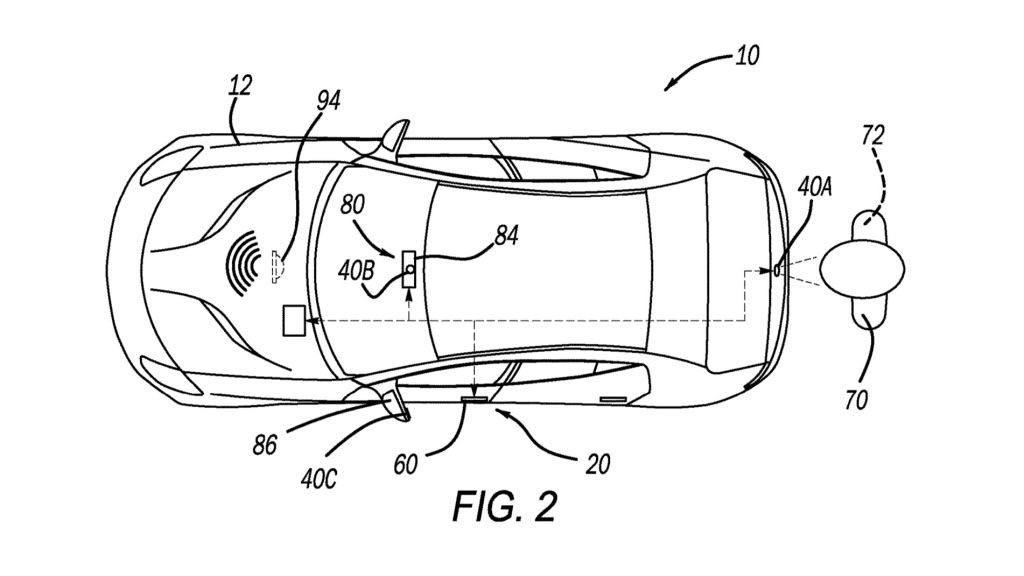
In fact, long before the standard was released, technical exploration around door handles had been ongoing for years. Gasgoo has been continuously tracking and organizing the technological patent trends of major international automakers in the field of door handles. Since 2022, relevant patents have shown a clear upward trend, focusing on contactless interaction, optimized hidden structures, information display, and biometric access. These patents do not emerge in isolation; together, they reflect the industry’s ongoing reconfiguration of the car door as the “first point of contact.”
At the interaction level, for instance, Hyundai Motor, in collaboration with Somalytics, has proposed a capacitive gesture-sensing solution that attempts to achieve unlocking through contactless means. The value of such technologies lies in enhancing convenience and operational fluency, yet their engineering prerequisites are being redefined: sensing systems can only serve as triggers, not the sole execution pathway.

In terms of structural design, the patents related to hidden door handles published by the Volkswagen Group attempt to optimize the internal rotating shafts and transmission structures, allowing users to trigger mechanical unlocking through physical pulling even when the electric pop-up mechanism fails. Such solutions are not simply about “retaining a hidden appearance”, but exploring whether the hidden design still maintains a clear and feasible mechanical release path under collision and deformation conditions.
In the direction of information interaction, Mercedes-Benz has showcased solutions that integrate the door handle area with lighting or display modules for vehicle status prompts or welcome interactions. Such designs have expanded the boundaries of exterior vehicle interaction, yet under the framework of the new national standards, their functional levels are clearly distinguished: displays may fail, but the mechanical opening points must always be clearly present.
Furthermore, automakers such as Stellantis have also explored integrating fingerprint recognition or identity authentication modules into door handles to achieve a “touch-and-recognize” entry experience. This marks the evolution of door systems toward digital identity access points. Equally critical, however, is that identity recognition can only affect authorization logic and must not serve as a necessary condition for opening the physical door lock.
However, one point needs to be clarified: these patented technical pathways themselves have not been rejected; they all face the same practical constraint: all “intelligence enhancement” must be built upon unconditionally available mechanical redundancy.
How Will Door Handles Change After the Implementation of Mandatory Standards?
As the implementation deadline of GB 48001-2026 approaches, the design philosophy of car door handles is undergoing a substantial shift.
First, electromechanical redundancy has changed from an “engineering alternative” to a mandatory prerequisite. The ideal solution in the future will no longer be “electronics first, mechanics as a backup”; instead, the user’s physical operation will always take the highest priority, regardless of whether the electronic system is online.
Second, recognizability is becoming a rigid indicator. The national standard sets clear requirements for the size, contrast ratio, and permanence of inner handle markings, meaning any advanced touch, gesture, or display interaction must give way to an intuitive mechanical pathway in emergency scenarios.
Third, fail-safety is being incorporated into the early design stage. Door systems are no longer designed merely for daily use; they must maintain predictable physical responses under extreme conditions such as power failure, collision, and deformation.
From an engineering perspective, these changes do not represent technological regression but rather bring door systems back into the scope of safety engineering.
In other words, GB 48001-2026 is not a negative ruling against “hidden door handles” but a confirmation of bottom-line requirements.
It clarifies one thing: no matter how interaction evolves, car doors must remain reliably openable under all circumstances.
As automobiles increasingly rely on electronic systems and algorithms for operation, the most fundamental physical capabilities are precisely what must not be overcomplicated. The reason door handles have come into the spotlight is that they connect to the most direct and irreplaceable escape route in accident scenarios.
Future technological trends will not cease, but the direction has become clear: intelligence can continue to advance, but safety must be prioritized and implemented first.