
Recently, I have been communicating with many friends in the auto parts industry, and everyone harbors a strong sense of unease to varying degrees.
Some people lament the rise of e-commerce platforms, noting that component prices are becoming increasingly transparent, leaving profits as thin as paper; others worry that manufacturers might bypass distributors and go direct to retail, or be replaced by supply chain platforms; still others find themselves in a state of confusion, torn between continuing to focus on distribution or establishing their own factories to produce products, in order to truly gain the upper hand.
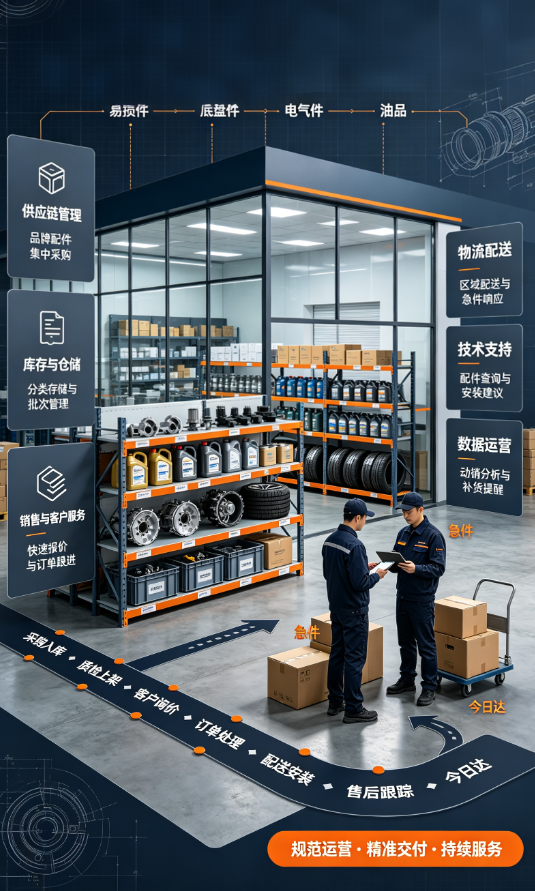
I want to tell all auto parts dealers that there is no need to underestimate themselves. Because we possess an irreplaceable scarce ability – to reach terminal repair shops on a large scale in a lower cost, higher efficiency, and more precise manner.
What are your core competencies?
I would like to ask all auto parts suppliers a question: What is your core competitiveness?
Some people may say, “My core competency lies in having a wide range of products and competitive prices.”
Then I ask: Can your SKU volume surpass the central warehouses of major platforms? Can your purchasing price outcompete those large-scale supply chain giants?
At this point, you will realize that “having a wide range of goods at competitive prices” is actually a beautiful illusion.
In the business world, excellence in any aspect—be it product, production, distribution, or service—can yield substantial rewards. The pitfall lies in mistakenly identifying one’s core competency as B when it is actually A. Investing heavily in B without realizing it can lead to a wasted investment and ultimately result in failure.
Many people’s perception of dealers still remains rooted in the outdated concept of “making a profit from information asymmetry”, believing that once information becomes transparent, middlemen will disappear.
But imagine a brake pad brand factory that wants to sell its products to hundreds of thousands of repair shops across the country. Can it build hundreds of front warehouses by itself? Can it support thousands of salespeople to visit each shop? Can it deliver the goods to the workshop in half an hour after receiving a call from the repair shop, just like you?
It’s impossible, as the cost is too high. This is the value of auto parts dealers.
For example, if you open a store in an auto parts city, you are reaching out to those repair shops in the surrounding area that come to pick up goods on a large scale. But this is only the most basic channel. Because out of the 100 repair shops that come to the auto parts city, only 20 may happen to be your target customers.
What is a good channel? A good channel is one that achieves large-scale reach at low cost. For example, you actively send salesmen to visit local second-tier repair shops and quick-repair chains with catalogues and samples. With the same amount of time, you can reach more precise customers and achieve a higher conversion rate.
Is there a more efficient way to reach out? Yes, it’s channel innovation. For example, you can invite the owners of repair shops to a WeChat group, where you can inform them of new products, promotions, and technical updates in a timely manner. You can also share maintenance cases and common fault solutions in the group. Every owner in the group is your precise customer. You no longer need to call each shop individually; a single push can achieve large-scale reach.
Therefore, the essence of auto parts dealers lies in achieving cost-effective and large-scale reach.
The value of reach far exceeds your imagination
Ultimately, the business of auto parts dealers is to buy in and sell out. However, it is precisely this buying and selling process that provides an indispensable channel foundation for the entire automotive aftermarket.
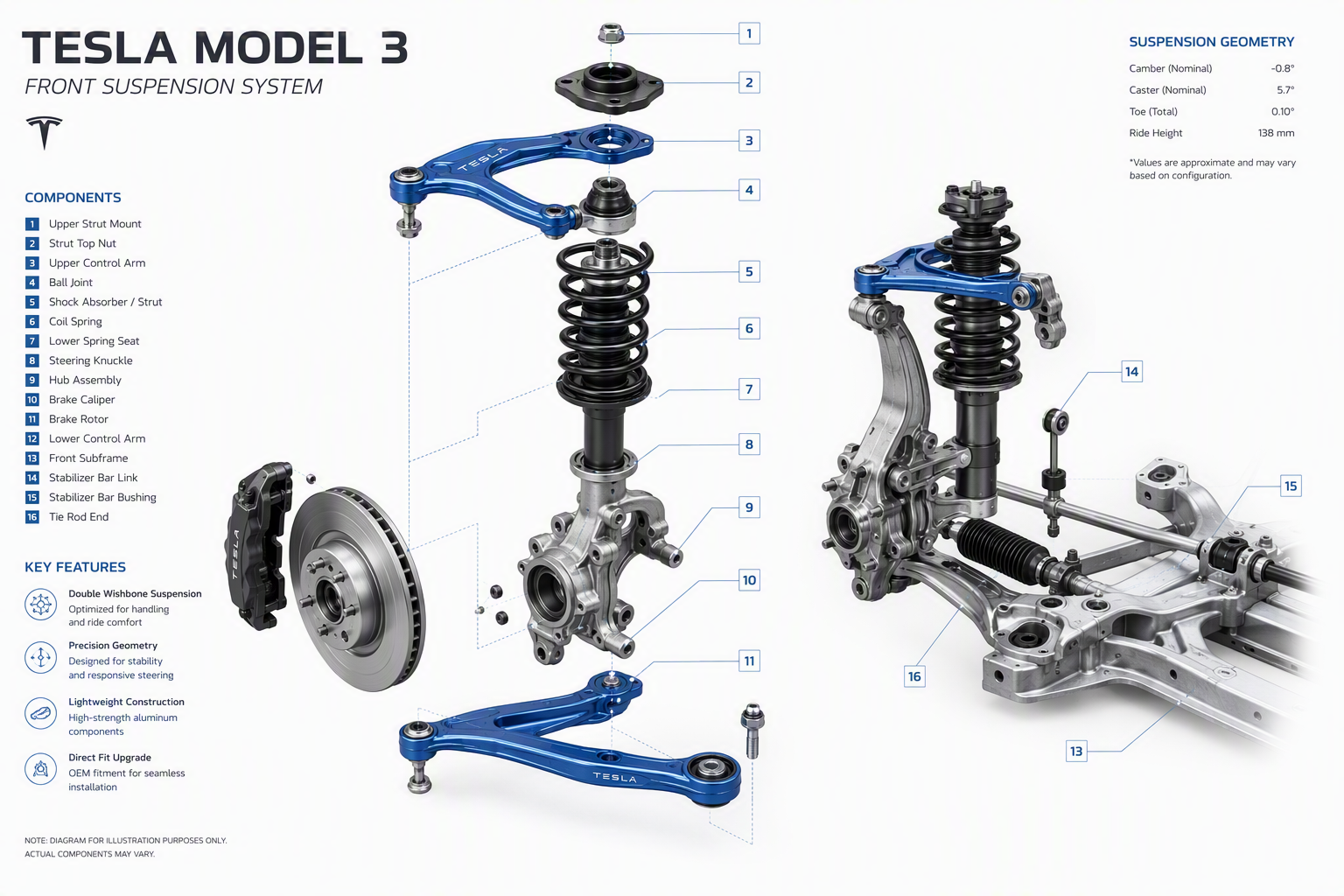
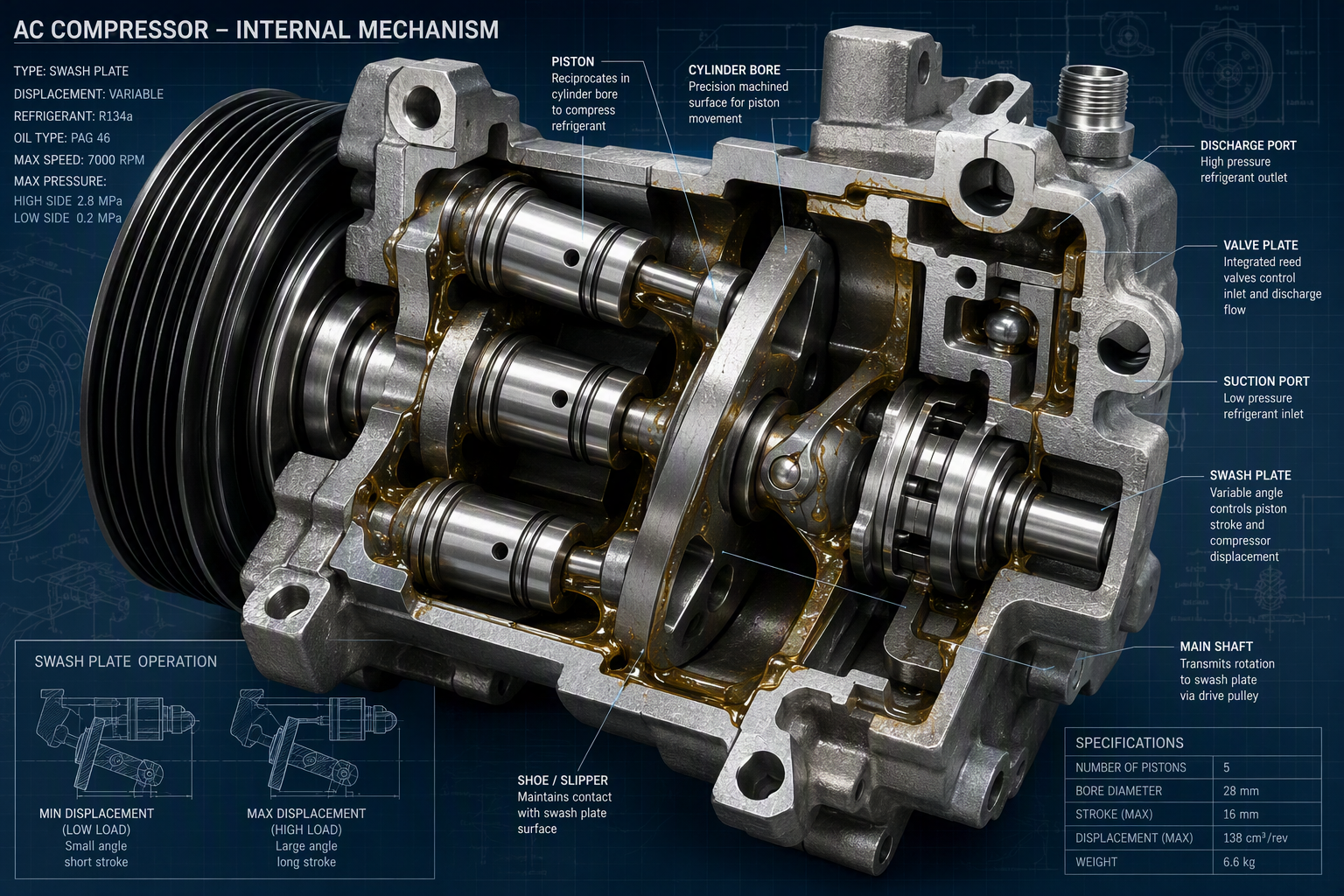
Firstly, the unique natural attributes of the auto parts industry fundamentally determine the key position of dealers. The SKUs of auto parts are incredibly diverse and complex, with an ordinary passenger car having up to tens of thousands of parts. Due to differences in brands, model years, displacements, and configurations, even minor variations mean that parts cannot be interchanged. OEMs and brand owners simply do not have the energy or capability to distribute a vast array of parts to every terminal repair shop, let alone provide one-on-one service to hundreds of thousands of scattered repair shops across the country.
The demands of terminal repair shops are scattered yet urgent, covering cities, counties, towns, and even villages. Single stores have small procurement volumes and require frequent restocking. Especially for emergency repairs of accident vehicles and sudden malfunctions, parts must be delivered within half an hour or an hour. Such extreme real-time response capabilities are simply unachievable for factories located far away and standardized e-commerce platforms.
Secondly, auto parts are not standardized commodities. The identification of genuine parts, compatibility with vehicle models, quality assurance, and installation guidance all require a high degree of professionalism. Repair shops truly trust local auto parts suppliers who they have dealt with for years, understand vehicle models and malfunctions, and can solve problems in a timely manner, rather than online customer service representatives who are thousands of miles away and only know how to provide template answers.
Meanwhile, auto parts operations are accompanied by significant capital and inventory pressures. Large-scale inventory stocking requires ample cash flow, while overstocking of unsold parts, losses from returns and exchanges, and turnover of repair shop accounts are all tangible business risks. Auto parts distributors naturally serve as buffers and stabilizers in the industrial chain, connecting upstream production with downstream terminals through their own capital, inventory, and services, enabling the efficient operation of the entire automotive aftermarket.
Finally, I want to tell all auto parts dealers that whether they can stay in the game is determined by how much value they can create for the end-users and the industry. Therefore, we must clearly recognize our core value, adhere to the essence of channels and services, continuously hone our low-cost, high-efficiency, and precise terminal reach ability, continuously innovate business models, and amplify our irreplaceability.