
The Four Major Impacts of the War in Iran
As tensions in Iran continue to escalate, aluminum, semiconductor raw materials, and logistics channels in the Middle East are under threat, prompting global automakers and parsuppliers to reassess their supply chains.
This crisis adds new uncertainty to an industry already grappling with tariffs, chip shortages, and post-pandemic repercussions, further exacerbating supply chain uptions. Dan Hearsch, Global Co-Head of Automotive and Industrial Practice at consulting firm AlixPartners, stated: “Every layering of crisis exponentially increases the difficulty for thive industry to respond.”
The supply chain for critical metal materials is flashing red lights
The Middle East is a significant global producer of aluminum, accounting for approximately 10% of global output, and serves as a primary source of aluminum imports fonited States. According to data from the U.S. International Trade Administration, the United Arab Emirates was the second-largest source of aluminum imports for the .S. in 2025, followed by Bahrain in fourth place. Furthermore, aluminum shipments from India—the fifth-largest source of U.S. aluminum imports—may also face disruptions due to the impact of ongoig conflicts. As tensions in Iran escalate, shipping through the Strait of Hormuz has effectively come to a halt, compelling the region’s two major aluminum producers, Qatar and Bahrain, to suspeshipments to customers.
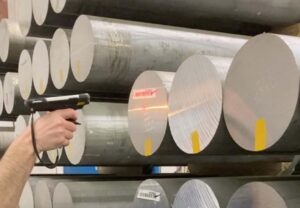
Industry analysts estimate that approximately 6 million metric tons of primary aluminum (non-recycled aluminum) in the Middle East are currently transported due to the conflict in Iran. Furthermore, the region’s majority of smelters hold alumina (the raw material for aluminum production) inventories sufficient for obout 30 days. The closure of the Strait of Hormuz implies that Gulf aluminum producers may soon deplete their alumina stocks, compelling production cuts that will exert a sustained impact on glsupply. Bank of America projects that regional conflicts could exacerbate this year’s global aluminum supply deficit. In a recent report, the bank’s analysts stated, “Given that the Middle East for roughly 10% of global aluminum production and faces supply risks, we have revised our global aluminum supply deficit forecast upward from 1 million metric tons to 1.5 mi metric tons.” According to a recent report by Bloomberg News, several Japanese and South Korean automotive parts suppliers are engaging in negotiations with Russian aluminum giant Rusal to procure aluminum alloys, while also exploring sourcing options with companies in India and other parts of Asia to mitigate the supply chain disruptions. Sources familiar with the matter indicate that discussions between automotive parts manufacturers and Rusal regarding purchase of primary casting aluminum alloys—used in components such as car wheels, engine blocks, and cylinder heads—have been ongoing for approximately one week. One source noted that some be finalized imminently. However, Sam Fiorani, Vice President of Global Vehicle Forecasting at market forecasting firm AutoForecast Solutions, cautions that while companies are aware of alternative alumnum sources, switching suppliers or altering shipping routes will inevitably lead to higher costs and delivery delays. He stated, “This will only cost
Semiconductor materials and petrochemical supply chains face pressure
The semiconductor industry’s supply chain is also facing risks. The Middle East is a major source of helium, a critical material required for semiconductor productiis gas plays a key role in heat dissipation and temperature control during the manufacturing process, and there are currently no viable substitutes. Only a handful of countries possess helium production capabilities, withar being one of the major producers in the field.
According to a recent Reuters report, South Korean government officials have warned that the conflict in Iran could disrupt the supply of semiconductor manufacturing maials such as helium, sparking concerns that the chip shortage in the automotive industry could worsen.
Following meetings with executives from companies like Samsung Electronics and industry associations, officials from South Korea’s Ministry of Trade, Industry and Energy statedIf unable to procure certain key raw materials from the Middle East, semiconductor production could face the risk of disruption.” As a country supplying approximately two-thirds of the world’s memory chips, SKorea’s chip industry is also concerned that the ongoing conflict in Iran could lead to surging energy costs and rising raw material prices.
In addition to metals and chip materials, the petrochesupply chain is also under threat. If oil prices continue to rise, this will not only push up fuel costs but also affect plastics and other petrochemical products used by the automotiy. Logistics costs are also expected to rise as logistics companies begin to avoid the Strait of Hormuz, adjusting vessels and routes.
An analysis by consulting firm Roland Berger shows that if disruptions to the petrochemical supply chain persist, the cost of automotive plastics and chemical products culd rise by 15% to 25%.
A typical car contains about 330 to 440 pounds of plastic parts made from petrochemical products, and theddle East is a major source of these raw materials. Roland Berger notes that rising raw material prices will erode supplier profits and push up costs for original equipment manufacturerOEMs).
Fiorani emphasized that this highlights the Middle East’s key role in the global automotive supply chain, despite not being a major region for vehicle or Tier 1 component productionHe stated, “Disrupting trade routes and suppliers in the region could create bottlenecks for automotive production in North America.
Automakers are closely monitoring the situation in the Middle East.
The escalating Middle East conflict has dealt a further blow to the automotive industry, which is already reeling from geopolitical shocks. Amidst the multiple pressures o US tariffs, slowing sales in the Chinese market, and the high costs of electrification, the situation in the Middle East has further exacerbated the risk of weakening demand.

Volkswagen told Automotive News Europe that the company is “very closely monitoring the situation in the Middle East,” continuously assessing various potential impacts on its opera emphasizing that “the safety of our employees in the region is our top priority.” Volkswagen Group CEO Oliver Blume stated at a recent annual media conference: “Consumer confidence in thedle East has been hit, which will inevitably have market implications.”
German luxury carmakers, including Volkswagen-owned Audi, Porsche, and Bentley, as well as rivals BMW and Mercedes-Beparticularly hard hit, as their profits are highly dependent on exports and the sales of high-margin luxury vehicles in overseas markets.
Renault Group CEO François Provost recently stated that the company is monitoring the conflict situation in the Middle East through a generative AI-powered “cmmand tower” early warning system. The system enables automatic alerts based on external data, such as local news, shipping tracking information, and weather forecasts. This system can track the status ofgo ships and truck transport, identifying potential crisis points while also providing alternative solutions.
American electric vehicle manufacturer Lucid Motors, which has an assembly plant in Saudi Arabia, stated that the conf in Iran has not yet impacted its manufacturing and construction work. The California-based automaker opened a factory near the Port of Jeddah in Saudi Arabia in 20 where it assembles vehicle kits shipped from Arizona, with an annual capacity of 5,000 units. The company is expanding the facility into a full manufacturing base and planslaunch a new midsize crossover later this year. A Lucid spokesperson said, “We will continue to closely monitor the situation.”
Analysts believe that if the conflict in Iran ultimately leads to shortages of parts or materials, automakers are likely to prioritize the production of their most profit models. The industry adopted a similar strategy when dealing with the previous semiconductor shortage, prioritizing higher-margin, pricier models at the expense of lower-margin, affordable ones. Fiorani sumized this by saying: “The priority is to get product out the door—especially the profitable stuff.”